
MarketingGuide
How Do Google AI Mode Ads Work? Now Live in the US
Google AI Mode ads now run in the US, drawn from your existing Search, Shopping and Performance Max campaigns, and since October 28 they can follow people into follow-up questions. Here's how they work, what you can't control and how to get your ads eligible.

By Akif Qureshi
Published 11 min read
On this page
Google AI Mode ads are text and Shopping ads from your existing Search, Shopping and Performance Max campaigns that Google shows within or alongside AI Mode answers in the US, labeled "Sponsored."
The US is where they started: Google began testing them here in May 2025, its help page now lists the United States as a live market, and on October 28, 2026 it launched multiturn ads, which can appear in answers to follow-up questions, in the US first. There's no new campaign type and no separate opt-out. This guide covers how the ads look, which campaigns and match types qualify, what reporting you get, why Google is pushing them now, and what to check in your account before the holiday season.
Key takeaways
What are Google AI Mode ads?
AI Mode is the conversational tab in Google Search that answers longer questions with an AI-written response and takes follow-ups. Google's help page on ads in AI-powered experiences in Google Search says ads can appear directly within or alongside that response, built from assets already in your campaigns: headlines, descriptions, images, prices and landing pages.
What they look like:
- A "Sponsored" label. Every ad within AI Mode and AI Overviews carries it and is visually separated from the organic answer.
- Text ads and Shopping ads. These are the two supported formats. Google says it's also experimenting with local inventory ads and vehicle ads.
- Sponsored product list items. For shopping questions, ads can sit among the products listed in the answer. Google says click-through rates are already similar for sponsored and organic product list items, based on US data from August 20 to September 3, 2026.
- An AI explainer. Some ads come with a short line, generated by Google's Gemini models, that explains how the ad relates to the search. Advertisers can't write, edit, approve or switch it off. Sometimes Google shows a plain section header instead.
AI Mode ads in the US: the timeline
| Date | What happened |
|---|---|
| May 21, 2025 | At Google Marketing Live, Google starts testing ads in AI Mode in the US and brings ads in AI Overviews to desktop |
| January 11, 2026 | Google announces a Direct Offers pilot that shows exclusive deals in AI Mode, and checkout from eligible US retailers "soon" |
| May 20, 2026 | Google Marketing Live: tests of Highlighted Answers and Conversational Discovery ads in AI Mode |
| October 2026 | Google starts testing ads for people who connect apps such as Gmail and Google Photos through Personal Intelligence |
| October 28, 2026 | Multiturn ads launch in the US; AI Mode ads scale to 10 more countries |
Google never announced a single "general availability" day for the US. What changed is that its help page now lists the United States as a market for ads within AI Mode, and its October 28 post says Google is "scaling ads in AI Mode" and that "we are launching multiturn ads in the U.S." That post, by Shashi Thakur, Google's VP and GM of Search Ads, also names Australia, Canada, India and seven other countries, with Brazil, Mexico and the UK planned for later in Q4 2026.
What are multiturn ads?
Until October, ads showed on the first answer in an AI Mode conversation. Multiturn ads can also show on the answers to follow-up questions. Someone who asks "plan a four-day family trip to Yellowstone in late September" and then follows up with "which lodges are closest to Old Faithful" has told Google a lot more by the second question, so a lodge's ad can now appear there. Google hasn't said when multiturn ads will reach other countries.
English only, even for Spanish searches
Google's help page says ads within AI Mode and AI Overviews run in English only. That matters in the US, because AI Mode has worked in Spanish since September 2025. A campaign that targets only Spanish speakers won't reach placements inside AI Mode answers for now. Ads above or below an AI Overview run in every language where AI Overviews are available.
Which campaigns are eligible for AI Mode ads?
You don't create anything new. Google says existing Search, Shopping and Performance Max campaigns take part automatically through the normal auction, with no new campaign or budget, and "you aren't charged extra to participate." Billing works as it does for standard Search ads.
Whether your ad can show depends on how it's matched. Google describes two kinds:
- Direct matching to the person's query, as in a normal search.
- Contextual matching to both the query and the AI response. This covers longer, exploratory questions where the commercial intent shows up in the answer rather than in the question.
Your match type decides which you can get:
- AI Max for Search, broad match, Shopping and Performance Max are eligible for both direct and contextual matching.
- Exact and phrase match keywords are eligible only when the query shows direct commercial intent. They "aren't eligible for contextual matching."
For example, "how should we plan a family road trip from Chicago to Yellowstone" names no product, but the answer may cover RV rentals and lodges. An exact match keyword can't be matched to that conversation; an RV rental company's broad match or AI Max campaign could be. "Rent an RV in Denver" has clear commercial intent, so exact and phrase match keywords can qualify.
What controls do advertisers have?
Google says you "can't target ads exclusively to AI Overviews or AI Mode," and you can't opt out of them separately from Search. If a Search, Shopping or Performance Max campaign serves in the US, it can serve in AI Mode.
What still works:
- Negative keywords keep blocking searches you don't want, including in AI Mode.
- Brand exclusions keep broad match and AI Max away from searches about brands you choose.
- Asset pinning and your other account and campaign guardrails still apply.
How is AI Mode ad performance reported?
Not separately. Google's help page says metrics for ads in AI Overviews and AI Mode are included in aggregate in your standard campaign reports, and the queries that triggered them in aggregate in the search terms report. There's no AI Mode segment, column or filter.
Two more things to know:
- Search terms can be approximations. Google's help page on ad group and asset group prioritization says that for searches on Lens, AI Mode, AI Overviews or autocomplete, the term in your report is the "best approximation" of the person's intent. A long question won't necessarily appear word for word.
- Merchant Center insights cover organic only. Merchant Center's AI performance insights show how your products are discovered in AI Mode and AI Overviews for English-language queries in the US and four other countries, but the page says the data is "strictly limited to organic AI traffic." It won't show your ads.
AI Mode ads vs AI Overviews ads vs classic Search ads
| AI Mode ads | AI Overviews ads | Classic Search ads | |
|---|---|---|---|
| Where they show | Within or alongside the AI Mode answer, including follow-ups (multiturn, US) | Within the AI Overview, labeled "Sponsored" | Above or below the organic results, including above or below an AI Overview |
| How they're matched | Directly to the query, or contextually to the query and the AI answer | Same as AI Mode | Keywords (exact, phrase, broad) or AI Max, matched to the query |
| How to qualify | Existing Search, Shopping or Performance Max campaign; broad match or AI Max for exploratory questions | Same as AI Mode | Any Search campaign; Shopping or Performance Max for Shopping ads |
| Language in the US | English only | English only | All languages |
| Reporting | In aggregate in campaign and search terms reports | In aggregate in campaign and search terms reports | Full reporting, including the "Top vs. other" segment |
| Separate opt-out? | No | No | Standard campaign settings |
One serving rule from Google's help page: on the same search, an ad can appear above an AI Overview and within it, but not within it and immediately below it.
Why is Google pushing ads into AI Mode now?
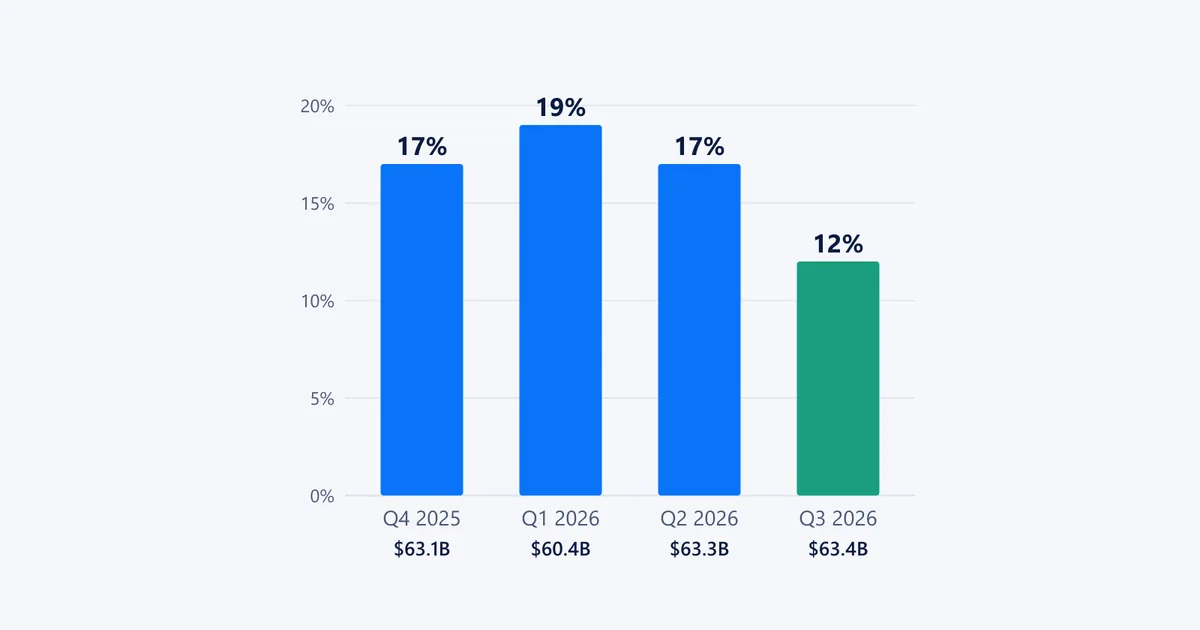
Revenue. Alphabet's Q3 2026 earnings release, published the same day as the ads announcement, shows Google Search & other revenue of $63.35 billion, up 12% from $56.57 billion a year earlier. That growth rate was 17% in Q4 2025, 19% in Q1 2026 and 17% in Q2 2026, according to Alphabet's earlier releases.
On the earnings call, chief business officer Philipp Schindler pointed to "the lower monetization we were seeing in AI Mode" as one reason, alongside currency movements and retail and media spending. CEO Sundar Pichai said AI Mode queries are on average three times longer than traditional searches. Longer questions give Google more context to match ads against, hence the push toward contextual matching, AI Max and multiturn ads.
Google is also widening who sees these ads. In October 2026 it started testing ads in AI Mode for people who connect apps such as Gmail and Google Photos through Personal Intelligence, which had been ad-free, as Search Engine Roundtable reported. Google's Search Help page on connected apps says connected-app information may be used to show ads, but ads won't be based directly on your Gmail inbox or Photos library, and advertisers don't get access to them.
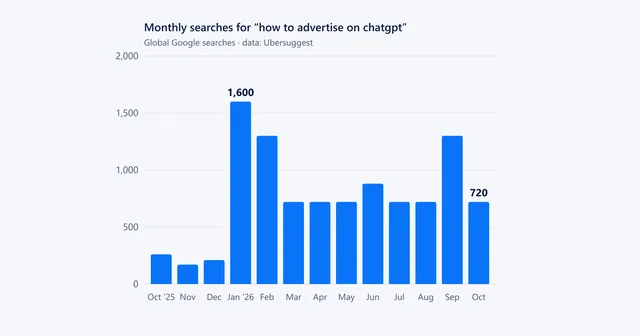
Google isn't alone: OpenAI's ChatGPT ads have been open to US advertisers since May. Our guide on how to advertise on ChatGPT in the US explains how they compare.
How to get your ads eligible for AI Mode in the US
These steps follow Google's recommendations on its help page, applied to a US account. With Black Friday on November 27 and Cyber Monday on November 30, check them this week.
Step 1: Check location and language targeting
Make sure your campaigns target the United States (or the states and cities you serve) and include English. A campaign that targets only Spanish speakers won't reach placements inside AI Mode answers for now; if you serve both audiences, keep an English campaign running alongside it.
Step 2: Add AI-powered matching
In Search campaigns, turn on AI Max for Search with search term matching, or add broad match keywords. Keep exact and phrase keywords for high-intent searches; they still qualify when a question is directly commercial. Shopping and Performance Max campaigns are eligible as they are.
Step 3: Bid on real conversions
Google recommends pairing AI-powered targeting with Smart Bidding (such as Maximize conversions, Target CPA or Target ROAS) backed by accurate first-party conversion data. Check that your conversion actions record real leads or sales, not page views, and that your best campaigns aren't limited by budget.
Step 4: Let assets and landing pages adapt
Turn on text customization and final URL expansion in AI Max and Performance Max so Google can tailor ad text and pick the best page for a long question. Keep landing pages clear and current, since Google says website content also feeds the AI explainers. Pin any asset that must always show, such as a required disclosure.
Step 5: Clean up your Merchant Center feed
For Shopping ads, Google asks for complete, fresh feeds: descriptive titles, good images, accurate prices in US dollars, ratings, and clear shipping and return policies, all matching the landing page. Holiday sale prices must match on both.
Step 6: Tighten negatives and brand exclusions
With no separate opt-out, negative keyword lists and brand exclusions are your main way to keep ads out of irrelevant conversations. Review the search terms report every week or two and add negatives for themes that never convert, such as "free," "jobs" or "DIY."
Quick checklist
- Campaigns target the US and include English.
- At least one campaign uses AI Max, broad match, Shopping or Performance Max.
- Conversion tracking records real leads or sales, and Smart Bidding is on.
- Your best campaigns aren't limited by budget.
- Text customization and final URL expansion are on, or deliberately off.
- Landing pages show current prices, stock and policies.
- The Merchant Center feed has no disapproved products.
- Negative keyword lists and brand exclusions are up to date.
- You've noted October 28, 2026 to compare performance before and after multiturn ads.
What AI Mode ads mean for SEO
Google says paid ads don't influence its organic AI responses, and being cited organically doesn't affect ad eligibility. Buying ads won't get your site cited, and being cited won't help your ads.
The bigger change is space. Ads now sit inside the answer, next to organic product list items and source links, and Google says sponsored and organic product list items already get similar click-through rates in the US. On commercial questions, organic listings compete with ads in the same block, and now across follow-up questions too.
For SEO the work stays the same: be the clearest source for the informational questions AI Mode answers, and keep product pages and feeds accurate so you appear in organic product lists too. Merchant Center's AI performance insights now show that organic side for US English queries. If organic clicks from commercial searches drop, widen your traffic sources; our guide on how to increase website traffic covers the main channels.
Frequently asked questions
Are Google AI Mode ads available in the US?
Yes. The US is where Google started testing them in May 2025, and Google's help page now lists the United States as a market for ads within AI Mode. Google hasn't announced a formal general-availability date; its October 28, 2026 post says it is scaling ads in AI Mode and launching multiturn ads in the US. Ads inside AI Mode answers run in English only.
Do I need a new campaign for AI Mode ads?
No. Google says existing Search, Shopping and Performance Max campaigns are eligible automatically, in the same auction and at no extra charge. To reach longer, exploratory questions, use AI Max for Search or broad match; exact and phrase match keywords only qualify for searches with direct commercial intent.
Can I opt out of AI Mode ads?
Not separately. Google says you can't target ads only to AI Mode or AI Overviews, or exclude them while staying on Search. Negative keywords, brand exclusions and asset pinning still apply, so use those to control when and how your ads show.
How do I see AI Mode ad performance?
You can't see it separately. Google includes AI Mode and AI Overviews results in aggregate in your normal campaign and search terms reports, with no dedicated segment. Compare results before and after October 28, 2026, and watch for longer, question-style search terms.
Share
X (opens in a new tab)LinkedIn (opens in a new tab)WhatsApp (opens in a new tab)Akif Qureshi has worked in SEO for more than two years, auditing sites, planning content and tracking how Google updates change real traffic. He started SERP Times to report search changes clearly and to say exactly what site owners should do about them.
Certifications
- Google Analytics (Google)
- Google Ads Search (Google)
- HubSpot
- Digital Vidya
- DSIM
- Internship Studio