
AI SearchGuide
What Search Engine Does ChatGPT Use? Bing and Its Own Index
ChatGPT's web results come mainly from Microsoft's Bing, plus other search providers OpenAI doesn't name, content partners and a growing index of its own. Here's what OpenAI says, what the studies found, and how to get your site into ChatGPT's answers.

By Akif Qureshi
Published 7 min read
On this page
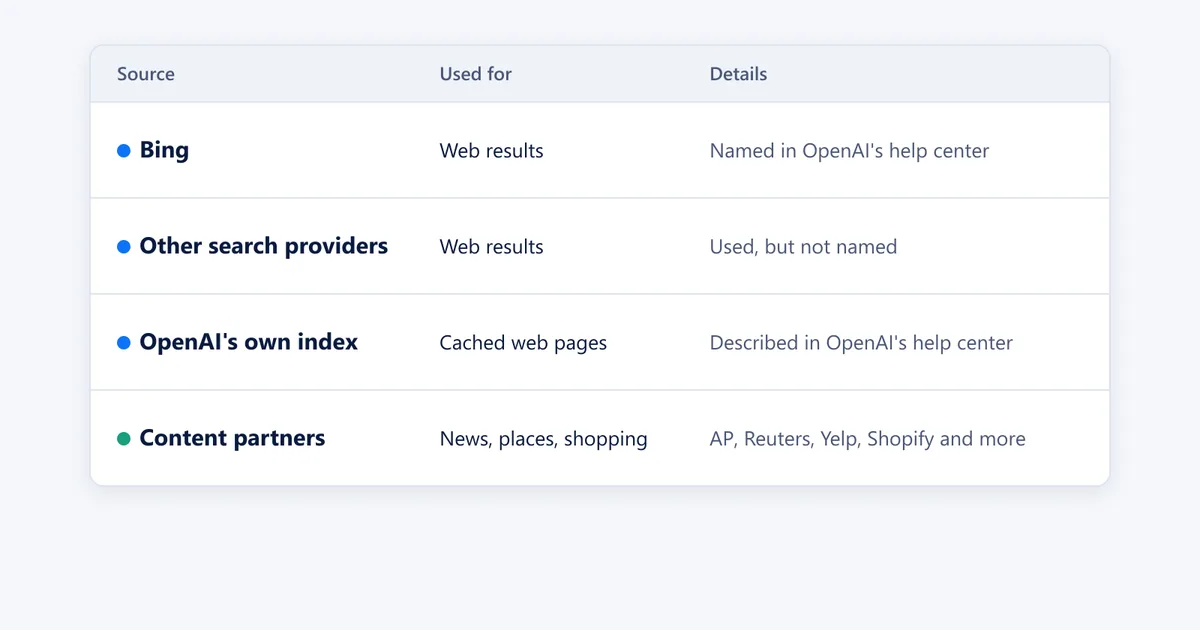
What search engine does ChatGPT use? Mainly Microsoft's Bing, alongside other search providers OpenAI doesn't name, content from partner publishers, and a growing index of its own: OpenAI's help center says ChatGPT may send search queries to Bing, and it separately describes "OpenAI's indexed and cached web content" as a source.
So the honest answer isn't one engine. ChatGPT search started out closely tied to Bing, and the studies that compared its citations with Bing and Google show it has since drifted away from both. This guide covers what OpenAI itself says, how ChatGPT's search has changed since 2023, what the data shows, whether Google is involved, and what that means if you want your site cited. Everything here was checked against OpenAI's own pages on November 5, 2026.
Key takeaways
What OpenAI says about ChatGPT's search sources
OpenAI has never published a single list of search engines, but its own pages add up to a clear picture:
- Third-party providers and partners. When OpenAI launched ChatGPT search on October 31, 2024, its announcement said search uses third-party search providers plus content supplied directly by partners, with partner data for weather, stocks, sports, news and maps.
- Bing, by name. OpenAI's help page on ChatGPT search for Enterprise and Edu says ChatGPT "may share disassociated search queries with the Bing search engine to return web results." The same page says ChatGPT for Healthcare workspaces don't use Bing at all.
- Rewritten queries. The consumer help page on searching the web with ChatGPT explains that ChatGPT rewrites your prompt into targeted searches for its search partners and may share your approximate location (not your IP address or account details). Its privacy links point to Microsoft and Shopify.
- OpenAI's own index. OpenAI's help center describes an "offline web search" option that uses "OpenAI's indexed and cached web content" instead of live external providers, and its API lets developers search the cache and index only. OpenAI notes that coverage isn't guaranteed.
OpenAI's people have said the same in public. Shortly after launch, OpenAI told reporters search used a mix of technologies including Bing, as Search Engine Roundtable reported. In April 2025, ChatGPT head Nick Turley testified in the US government's search antitrust case that ChatGPT uses Bing's technology and that OpenAI was years away from answering most queries with its own search technology, according to Reuters.
How ChatGPT's search has changed
| Date | What happened |
|---|---|
| May 2023 | Microsoft announces Bing as ChatGPT's default search experience for Plus users |
| July 3, 2023 | OpenAI pauses browsing because it could display the full text of pages in ways it didn't intend |
| September–October 2023 | Browsing returns as "Browse with Bing" and leaves beta on October 17 |
| July 25, 2024 | OpenAI tests a SearchGPT prototype with a small waitlist |
| October 31, 2024 | ChatGPT search launches for paid users |
| December 16, 2024 | Search opens to all logged-in users |
| February 5, 2025 | Search works for everyone, with no account needed |
| 2025–2026 | OpenAI adds multiple searches per answer, shopping results and its own cached index |
Does ChatGPT use Google?
Not officially. OpenAI has no search partnership with Google, and in the same April 2025 testimony Turley said Google had turned down OpenAI's request for access to its search technology, according to Reuters.
One report complicates this. In August 2025, The Information reported that OpenAI had partly used Google results gathered by SerpApi, a service that scrapes Google's search pages, for some current-events answers. OpenAI hasn't confirmed it. Google sued SerpApi in December 2025. Treat Google as, at most, an unofficial and indirect source.
What the studies show
Researchers have compared the pages ChatGPT cites with what Bing and Google rank for the same questions:
| Study | Date | What it found |
|---|---|---|
| Seer Interactive | February 2025 | 87% of ChatGPT's citations matched Bing's top 20 results; about 56% matched Google's |
| Ahrefs | August 2025 | Across 15,000 long-tail queries, only about 8% of ChatGPT's citations were in Google's top 10, and about 8% in Bing's |
| Ahrefs | August 2025 | 83% of the results behind ChatGPT's searches didn't appear in Google's results at all |
| Rankability | September 2026 | ChatGPT's citations didn't closely match any of the search indexes it measured |
The pattern is consistent with what OpenAI describes: ChatGPT started out leaning heavily on Bing, then moved to a blend of providers, partner content and its own index. The studies used different methods and query sets, so treat the numbers as directional. The practical lesson holds either way: ranking first on Bing or Google doesn't guarantee a ChatGPT citation, and a page that ranks lower can still be cited.
When does ChatGPT search, and when does it answer from memory?
ChatGPT doesn't search for every question. It searches automatically when a question would benefit from current information, such as news, prices, sports scores or local businesses, or when you choose Search yourself. Otherwise it answers from what its model learned during training, which stops at a cutoff date and can miss anything newer. Workspace admins on business plans can turn search off entirely.
For some kinds of results, ChatGPT relies on partners rather than a search engine:
- News: licensing partners including AP, Axel Springer, Condé Nast, Hearst, News Corp, Reuters, The Atlantic, Time and Vox Media.
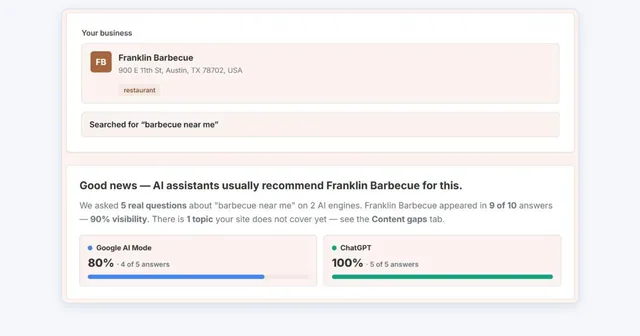
- Local businesses: Yelp licenses its reviews, photos and business details to OpenAI, as Yelp and Axios have reported. Our guide on how to get your business recommended by ChatGPT covers what that means for local SEO.
- Restaurant reservations: OpenTable and, in the US, Resy and Yelp.
- Shopping: product feeds from merchants, including Shopify stores through Shopify's catalog.
What this means for your website
- Allow OpenAI's search crawler. OpenAI's crawler documentation says sites should allow OAI-SearchBot to appear in ChatGPT search results. GPTBot is for training and is a separate setting, so you can block training and still be searchable. ChatGPT-User visits a page when someone asks ChatGPT about it. Our robots.txt generator has presets for these bots, and our robots.txt and sitemap checker shows what your file allows.
- Check your CDN and firewall. OpenAI also asks sites to allow its published search-bot IP addresses, because some hosts and CDNs block AI crawlers by default.
- Get indexed in Bing. OpenAI doesn't say Bing indexing is required, but because Bing is a named source, verify your site in Bing Webmaster Tools, submit your sitemap and use IndexNow so Bing picks up changes quickly. Bing's AI Performance report also shows citations in Microsoft's own AI answers.
- Keep doing good Google SEO. It doesn't feed ChatGPT directly, but the same clear, well-structured, trustworthy pages tend to be cited everywhere.
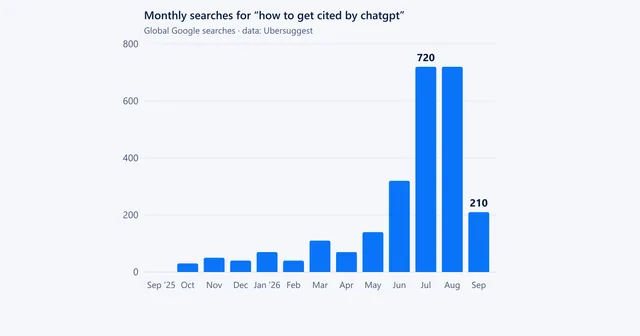
- Write pages ChatGPT can quote. Answer the question near the top, use specific facts and dates, and keep pages current. Our guide on how to get cited by ChatGPT goes into detail.
- Track the traffic. In GA4, ChatGPT referrals show up as
chatgpt.comin the Traffic acquisition report, often grouped in the AI Assistant channel.
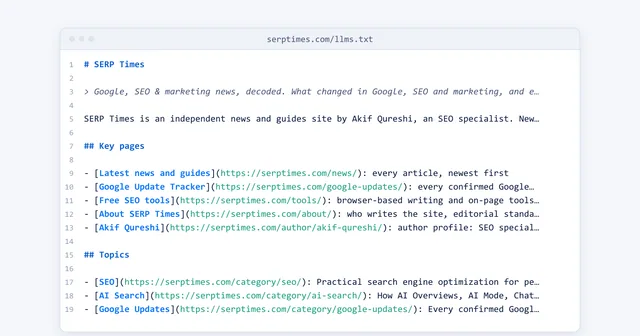
An llms.txt file won't change any of this: OpenAI hasn't said its crawlers read it. Our guide to llms.txt explains what it does and doesn't do.
ChatGPT vs Claude search
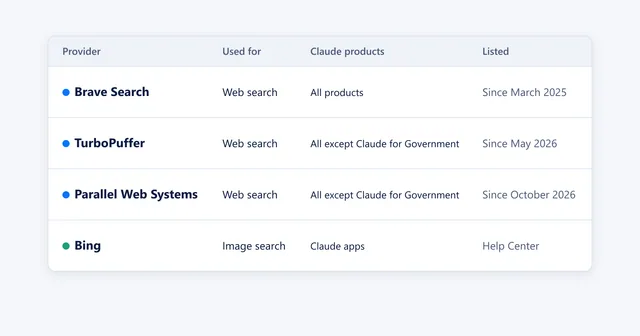
Anthropic's Claude takes a different route. Its web search runs on Brave Search plus two newer providers, with Bing used only for images. Our companion guide on what search engine Claude uses covers the evidence, so you can make sure your site is visible to both.
Frequently asked questions
Does ChatGPT use Google?
Not officially. OpenAI has no search partnership with Google, and an OpenAI executive testified in April 2025 that Google turned down OpenAI's request for access to its search technology. The Information reported in August 2025 that OpenAI partly used Google results gathered by a third-party scraping service, but OpenAI hasn't confirmed that.
Does ChatGPT use Bing?
Yes. OpenAI's help center says ChatGPT may share search queries, stripped of personal details, with the Bing search engine to return web results, and OpenAI executives have described Bing as an important provider. It isn't the only source, though: OpenAI also uses other providers, content partners and its own index.
Does ChatGPT have its own search engine?
Partly. OpenAI runs its own search crawler, OAI-SearchBot, and its help center describes 'OpenAI's indexed and cached web content' as a source that some workspaces can search instead of live external providers. It still relies on third-party providers such as Bing for much of its live search.
How do I get my website into ChatGPT search?
Allow OAI-SearchBot in your robots.txt and at your CDN, which OpenAI says is required to appear in ChatGPT search results. Make sure your pages are indexed in Bing, keep them fast and up to date, and write pages that answer questions clearly so ChatGPT can cite them.
Share
X (opens in a new tab)LinkedIn (opens in a new tab)WhatsApp (opens in a new tab)Akif Qureshi has worked in SEO for more than two years, auditing sites, planning content and tracking how Google updates change real traffic. He started SERP Times to report search changes clearly and to say exactly what site owners should do about them.
Certifications
- Google Analytics (Google)
- Google Ads Search (Google)
- HubSpot
- Digital Vidya
- DSIM
- Internship Studio